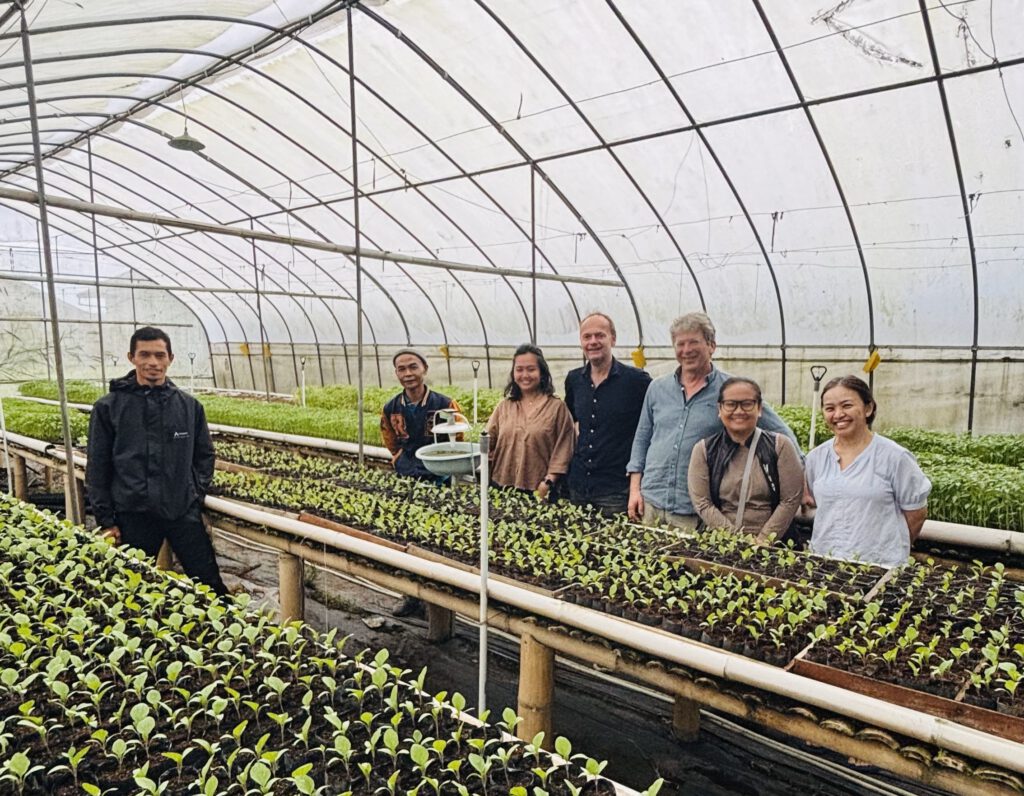
Indonesia is rich in high-quality crops, including vegetables, fruits, tubers and nuts, which together form the country’s main food sources. To keep producing enough good-quality food, these crops need to be developed further, and greenhouse technology is one of the most important innovations for doing that.
In the tropics, greenhouses make year-round production possible. That is hard to achieve in open fields, where strong winds, long periods of rain or extreme heat can disrupt cultivation. A greenhouse has mesh sides that keep out pests and insects, and ventilation that helps control the temperature.
Greenhouses support both agribusiness and horticulture, improving the quality and sustainability of what farmers produce. They let growers shape the growing environment, keeping out unwanted conditions and creating the ones crops need.
Compared with open fields, greenhouses offer several advantages:
- Water and fertilizer can be applied in measured amounts.
- Temperature, light intensity and humidity can be adjusted to what the plants need.
- The growing environment is easier to keep clean.
- The growing season is longer.
- Crops are protected from strong winds and extreme weather.
Benefits of growing horticultural crops in a greenhouse
1. Planned, predictable production
Unpredictable weather makes it hard for farmers to decide what to plant. When everyone has a big harvest at the same time, supply floods the market and prices fall, which can mean heavy losses. When harvests fail, output is low and prices spike. A greenhouse reduces the impact of the outside environment by controlling the microclimate, so farmers can plan and schedule their production.
2. Higher yields
For the same area of land, a greenhouse produces significantly more than an open field. Plants can also be monitored more closely, so pests and diseases can be treated quickly.
3. Higher-quality produce
Greenhouse cultivation protects plants from extreme conditions and delivers nutrients more accurately. Planting and harvesting on a shared schedule produces higher-quality crops that are consistent in shape and size.